

**From Idea to Impact: Stories from the ContentLift Hackathon 2025 Winners
The ContentLift Hackathon 2025 brought together creators from different backgrounds, industries and regions, all united by one goal: to produce content that is not just fast or functional, but thoughtful, refined and impactful.
Across blog, image and video categories, participants were challenged to use ContentLift to elevate their ideas into high-quality, publish-ready work. From sports performance and freelancing to practical educational writing, the winning projects revealed a common theme: when human creativity is paired with the right AI tools, content quality rises.
In this spotlight, we feature three outstanding winners and share their journeys, what inspired their ideas, how they approached the creative process and how ContentLift supported their work from concept to completion.
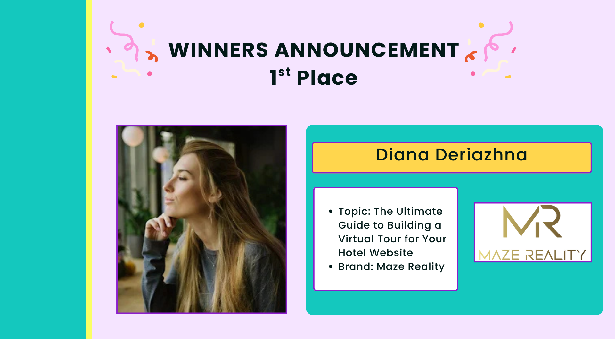
First Place: Diana Deriazhna
What inspired the idea behind her winning project
Diana approached her project with a clear, reader-first mindset. Her goal was to create content that was practical, easy to read and immediately useful, something readers could apply right away rather than simply consume.
She consistently evaluated her work by asking a simple question: What would I want to gain from reading this? That perspective guided every decision she made throughout the writing process.
How she approached developing and refining her entry
Diana focused heavily on structure and clarity. She reviewed AI-suggested layouts critically, assessing whether each section was engaging, well-organized and genuinely helpful.
While AI supported the process, she made deliberate editorial choices — rewriting repetitive sections, refining language and ensuring the article felt natural and human.
The role ContentLift played in shaping her final submission
ContentLift’s fact-checking, readability analysis and tone-of-voice features helped Diana maintain accuracy and consistency while keeping the content engaging.
For her, the tool was especially valuable in balancing SEO requirements with a strong human voice, ensuring the final article remained both discoverable and enjoyable to read.
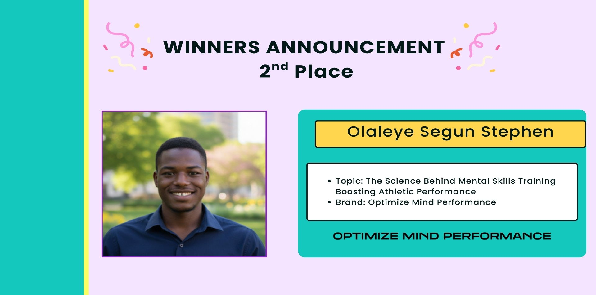
Second Place: Olaleye Segun Stephen
What inspired the idea behind his winning project
As a sports enthusiast, particularly a football fan, Olaleye was inspired by a gap he observed in athletic training: while physical preparation is well supported, mental performance often isn’t.
His project focused on helping athletes and sporting organizations understand the importance of mindset, focus and emotional resilience, translating science-backed concepts into accessible, practical content.
How he approached developing and refining his entry
Olaleye began by defining a clear framework around common mental performance challenges such as confidence, motivation, focus under pressure and recovery.
Using ContentLift, he tested different formats, from educational content to coaching insights and lead-generation materials, refining tone, clarity and consistency with each iteration. The ability to evaluate and improve drafts quickly allowed him to build a complete, cohesive content system within the hackathon timeframe.
What stood out to him about the ContentLift experience
For Olaleye, ContentLift’s structured templates, tone optimization and AI-powered evaluations were game changers. They enabled him to simplify complex psychological concepts without losing credibility or depth.
He also highlighted how the hackathon pushed him to think strategically, not just creatively, about brand voice, audience needs and real-world application.
Third Place: Vikthor Ozemoya
What inspired the idea behind his winning project
Vikthor’s project was driven by a desire to help people navigate the uncertainties of freelancing and remote work, a space where many struggle to find clear, reliable guidance.
His content focused on addressing real problems, offering readers clarity and direction through thoughtful, well-researched blogging.
How he approached developing and refining his entry
Vikthor combined research with iterative refinement. He used AI tools to support topic generation, structure and clarity, while maintaining full ownership of his voice and message.
Through multiple revisions, he ensured his content communicated ideas clearly and effectively, demonstrating how AI can enhance storytelling rather than replace it.
What he learnt from the hackathon experience
For Vikthor, the biggest takeaway was understanding how AI and human creativity work best together. He also shared constructive feedback on ContentLift’s workflow, emphasizing the importance of adaptability and finding alternative solutions when tools don’t behave as expected.
His experience reinforced the value of persistence, iteration and staying focused on solving real problems.
What These Stories Tell Us
Across all three winners, one theme stands out: quality content is intentional.
Each creator started with a clear purpose, refined their work through thoughtful iteration and used ContentLift not as a shortcut, but as a tool to raise standards. Their journeys show that when creativity, strategy and ethical AI come together, ideas can turn into meaningful impact.
What Made the Hackathon Experience Valuable
Beyond the tools, the hackathon itself played a key role in shaping the winners’ experiences.
Diana described the hackathon as an opportunity to expand her understanding of blog writing and gain a new perspective on how AI can support, rather than dominate, the creative process.
Olaleye highlighted the challenge of building something meaningful under tight time constraints. The combination of community support, mentorship and access to ContentLift’s tools pushed him to think strategically, not just creatively, about brand voice, audience needs and marketing goals.
For Vikthor, the most valuable takeaway was seeing firsthand how AI and human creativity can work together. The experience reinforced that AI tools are most effective when used intentionally to enhance storytelling and communication.
How ContentLift Shaped the Final Outcomes
Across all three projects, ContentLift played a central role in refining and elevating the final submissions.
Standout features mentioned by the winners included:
- Tone and clarity optimization, helping content align with professional brand voices
- Structured templates, making it easier to build consistent, high-quality content
- Fact-checking and readability analysis, ensuring accuracy and audience engagement
- AI-powered evaluations, supporting faster iteration without compromising standards
For Olaleye, these features made it possible to translate complex psychological concepts into accessible, athlete-friendly content. For Diana, fact-checking and tone-of-voice adjustments ensured her article remained credible and consistent. Vikthor also shared constructive feedback, noting opportunities to further streamline the workflow and insights that help shape the future of the platform.
Challenges, Growth and Key Takeaways
Each winner faced challenges, from simplifying technical concepts to managing time and balancing SEO with human readability. What set them apart was their ability to adapt, iterate and stay focused on impact rather than perfection.
Olaleye emphasized the importance of prioritizing clarity over complexity. Vikthor highlighted resilience, finding alternative solutions when certain features didn’t work as expected. Diana reinforced the idea that AI-generated content still requires human refinement to feel authentic and valuable.
Together, their stories show that great content isn’t created by tools alone; it’s shaped by intentional creators who know how to use those tools well.
Looking Ahead: Inspiring the Next Wave of Creators
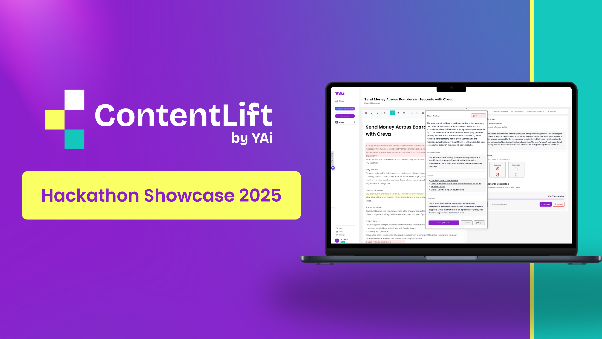
The ContentLift Hackathon 2025 winners demonstrate what’s possible when creativity, strategy and ethical AI come together. Their experiences highlight how ContentLift supports creators across industries, from sports and education to freelancing and marketing, helping them produce content that is accurate, engaging and professional.
As we look ahead to future hackathons, their journeys serve as an invitation to creators everywhere: focus on real problems, embrace iteration and use AI not as a shortcut, but as a partner in quality.